The Room That Made Space / continuation
Chapter Ten — The Book That Went Visiting
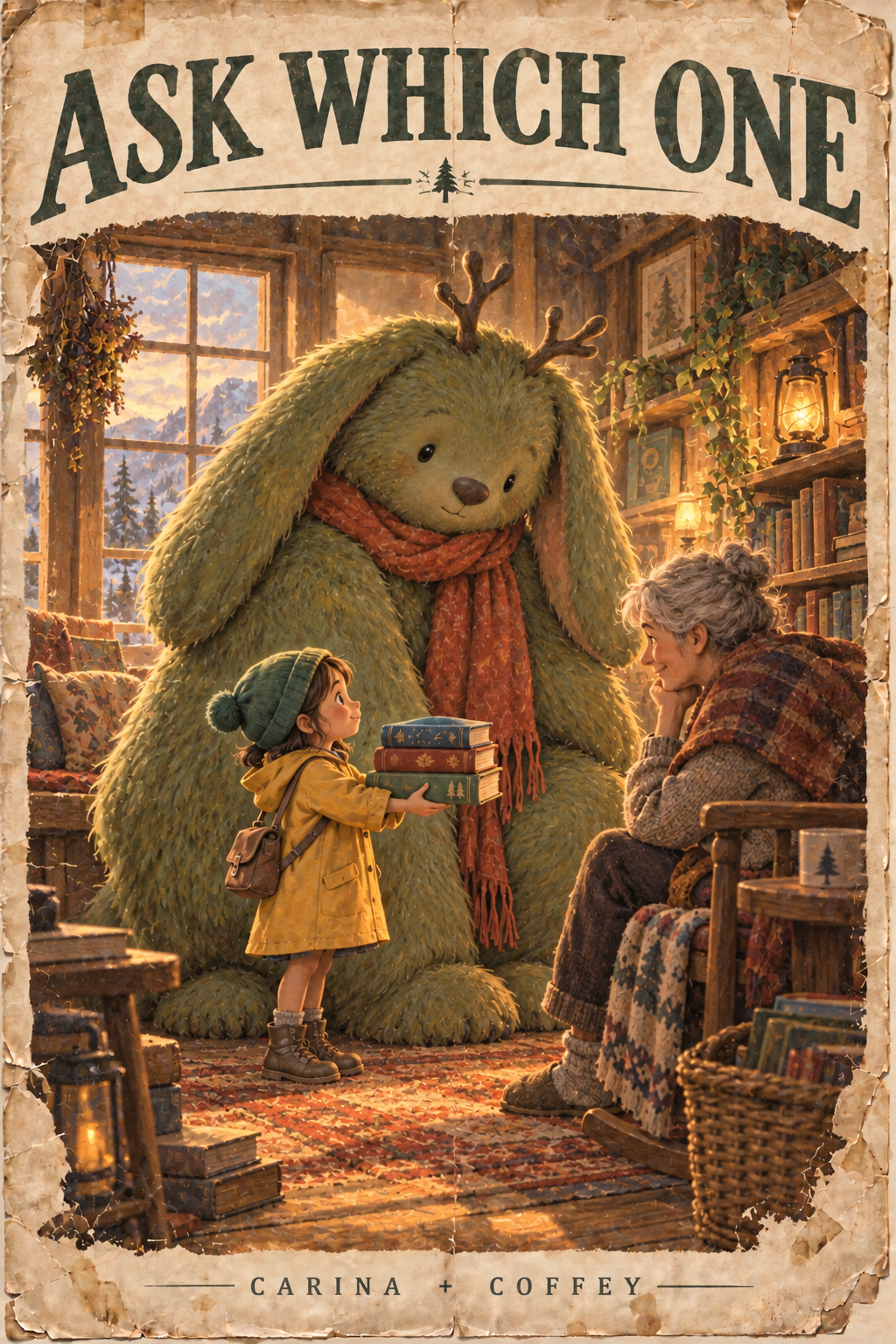
The next morning, Carina found the shy child in the reading corner, sitting beneath the woven blanket. Three library books stood in a row on the floor. The child had put the tallest one in the middle, as if the books were a little family.
“Which one goes in the knapsack?” Carina asked.
“All of them.”
“That will make it heavy.”
“I know.”
The child had heard that the older neighbor was staying in the quiet room. The neighbor had fixed the little radio and shown everyone how to keep its smallest screws from rolling away. Now the neighbor’s ankle hurt, and the stairs were a journey best saved for another day.
“We can bring the stories to them,” the child said.
Carina liked the idea so much that she reached for the books at once. Coffey, who was much too large to fit between the shelves without bending, crouched beside them. His red scarf brushed the floor.
“What does the neighbor like to read?” he asked.
Carina stopped. She knew the neighbor liked to repair radios. That was not the same as knowing what they liked to read.
“We could ask,” said the child.
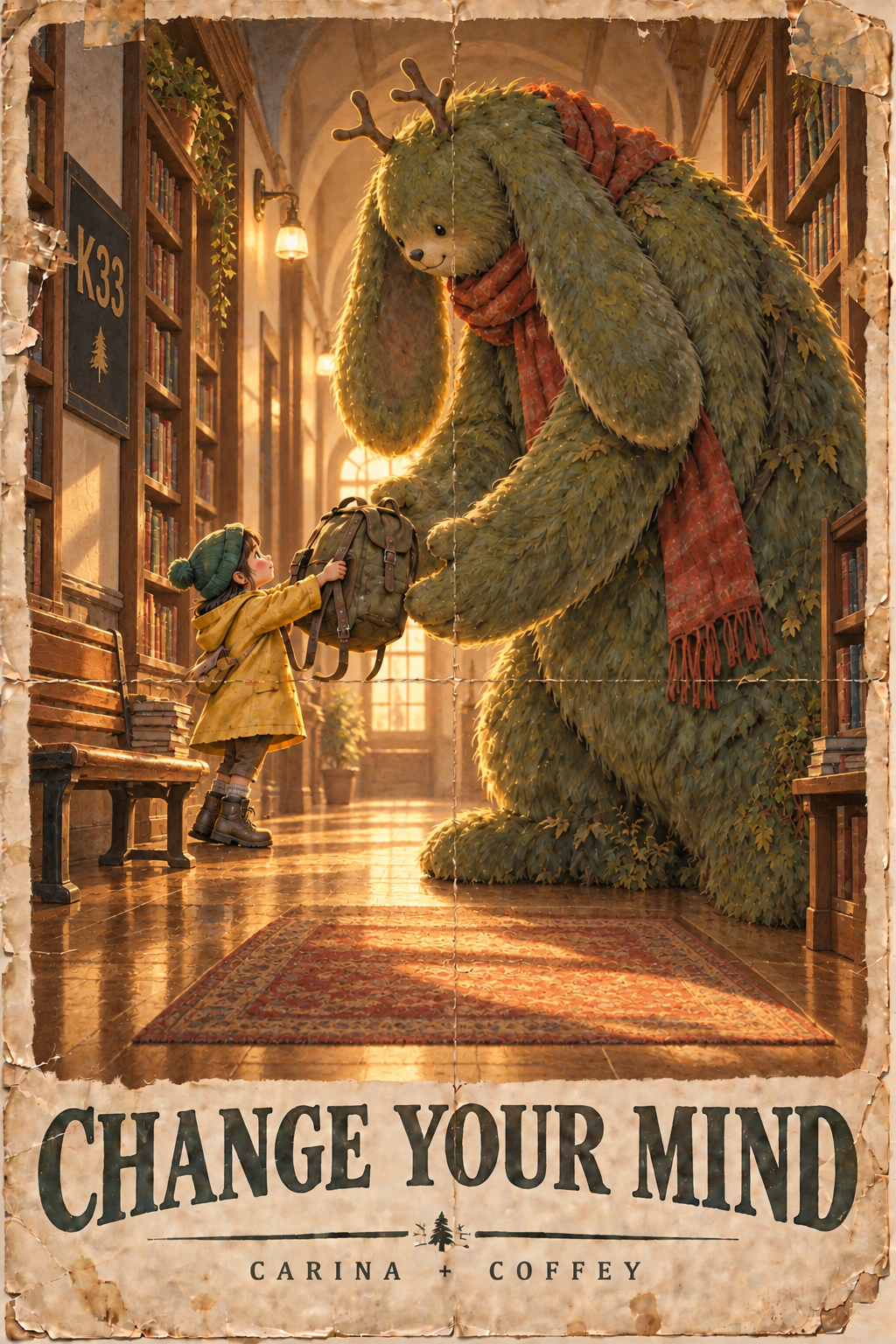
They packed the three books, two apples, and the folded note from the knapsack. Carina carried it over one shoulder. Coffey offered to take the weight, but she wanted to try first. Halfway down the hall, she set it on a bench and rubbed her shoulder.
“You can change your mind about help,” Coffey said.
“I just did.”
He lifted the knapsack with one enormous paw. It looked almost comically small against his moss-green fur.
At the quiet-room door, Carina knocked. The neighbor called for them to come in. Carina stepped forward, already opening the bag.
“We brought you books!”
The neighbor smiled, but their hands stayed on the blanket. “That is kind. I am having a very quiet morning.”
The child looked at Carina. Carina looked at the three books. They had imagined a visit with reading aloud and apples and perhaps a story about the radio. The neighbor had not promised any of that.
“Would you like us to leave one?” Carina asked.
“Maybe. What have you brought?”
The child held up the first book. It was full of pictures of far-off buildings. The second was a thick book of sea stories. The third was thin, with a blue cover and a drawing of a small garden.
“The garden,” said the neighbor. “I can hold that one today.”
Carina placed it within reach. She did not move the cup, the lamp, or the folded cloth to make a perfect space for it. She asked where it should go. The neighbor chose the left side of the bed.
“Would you like an apple?” the child asked.
“Later. Thank you.”
They left the apple on the table and carried the other two books away. Nobody read aloud. Nobody fixed a radio. It was a very short visit.
In the hall, the child’s face fell. “I thought it would help more.”
Coffey lowered himself onto the floor. Even sitting down, he was taller than both children. “It helped the amount the neighbor wanted,” he said.
Carina thought about the day they had let the frightened dog come to the water bowl in its own time. She had known how to wait with the dog. She was still learning how to wait with people.
They made a small card for the reading corner. The child drew three books. Carina wrote beneath them: A BOOK CAN VISIT. ASK WHICH ONE. The older neighbor later added one line in careful pencil: AND ASK WHEN.
After supper, the neighbor sent the garden book back with a folded scrap of paper inside. It was not a secret message. It was a sketch of a tin filled with soil, and beside it the words, “When my ankle is ready, would you show me what grew?”
Carina tucked the scrap into the book so it would not be lost. The child smiled at the picture. The visit had not become the visit they planned. It had become the beginning of another one.
The Room That Made Space / continuation
Chapter Eleven — A Place to Return
That evening the wind found every loose thing in the courtyard. It rattled the bird shelter Carina and Coffey had made from an old crate. It lifted a corner of the dog’s dry mat. It made the garden ribbons snap against the railing.
Inside K-33, the windows held and the rooms stayed dry. The people who cared for the building had worked hard to make that true. But the sound of wind could still make a room feel much bigger than it was.
The shy child came into the reading corner holding the garden book. “The dog isn’t by the gate.”
Carina looked through the window. The bowl was where they had left it. The mat was half beneath the bench. The dog was nowhere she could see.
“I’ll go look,” she said.
The child caught the sleeve of her yellow raincoat. “I’m coming.”
The courtyard light showed rain blowing sideways. The door shook once in its frame. Carina thought of the first careful drink the dog had taken and of how long they had waited for it to trust the bowl. She wanted to be the person who found it.
Coffey stood between the children and the door. He did not block it with a paw. He only asked, “Who knows this weather better than we do?”
Carina knew. She did not like knowing.
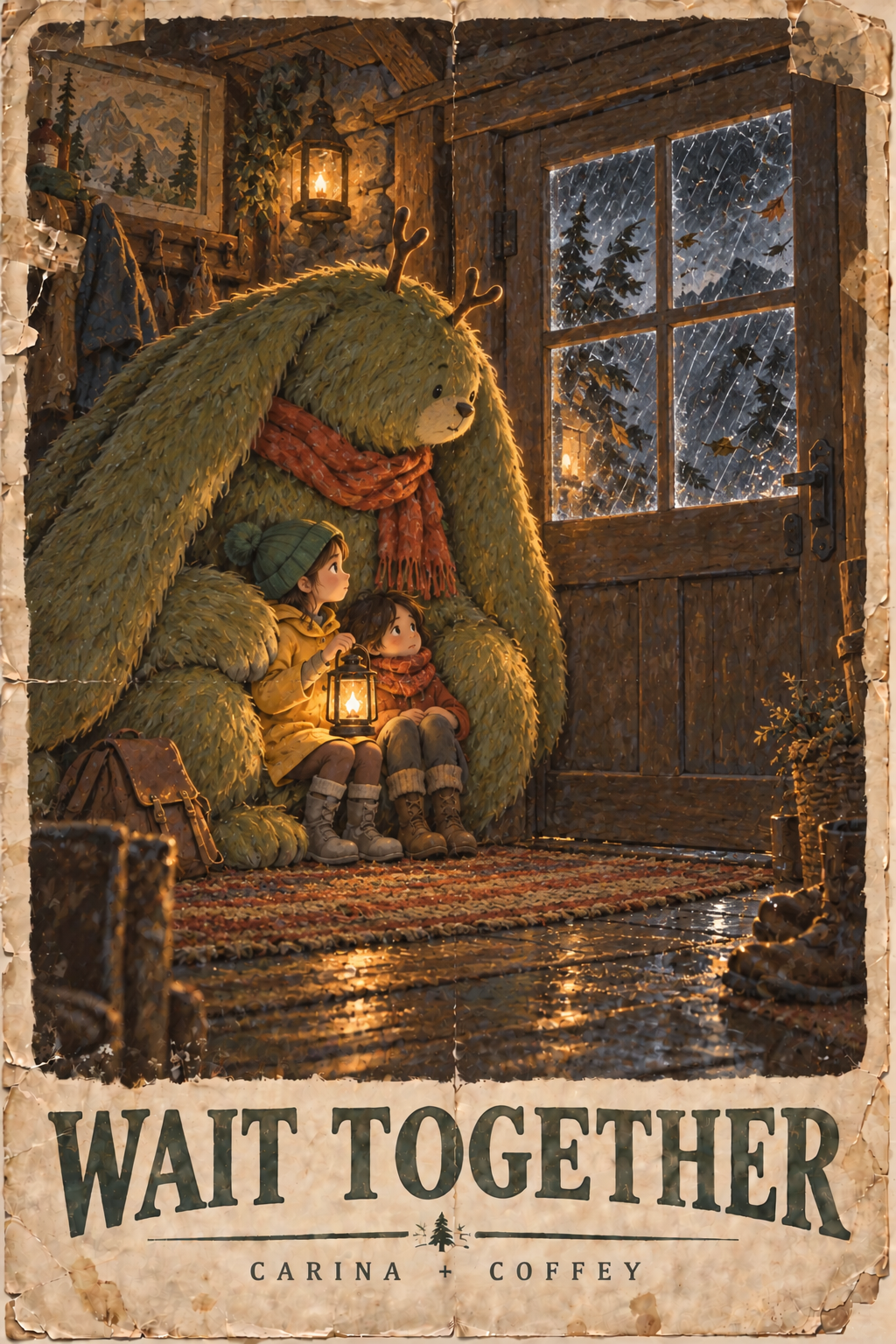
They went to the kitchen and told an adult what they had seen. The adult checked the courtyard from the sheltered doorway, then asked another grown-up to look along the covered return path. Neither child went out into the wind. Carina held the lantern while they watched. The child held the garden book so tightly that its blue cover bent.
“What if we had asked sooner?” the child whispered.
“We are asking now,” said Carina.
The adults came back wet, but safe. They had not seen the dog. They had checked the crate, the bench, and the dry space beside the wall. The dog might have gone to a place it knew, somewhere the wind could not reach. Nobody could promise that was true.
Carina wanted a better answer. The child wanted one too. Coffey’s red scarf hung still around his neck, and for once he had no easy words.
“We can make a place to return to,” he said at last.
With the adults’ help, they moved the mat into the covered entry. They set fresh water where it would not freeze or spill. Carina left an old towel nearby. Then they closed the outer door and went back inside.
The child watched the doorway for a long time. Carina sat beside them. She did not say the dog would come back. She did not say it would not. She offered half an apple from the knapsack, and they ate it together.
In the morning, the wind was gone. The courtyard was full of leaves and crooked ribbons. The bird shelter needed a new fastening. The dog still had not appeared.
Carina asked an adult if they could help tidy the sheltered entry. This time, the adult said yes. The children righted the water bowl and folded the towel. They did not chase every mark in the mud beyond the gate. They did the work they could do safely.
Just before the midday meal, a soft scrape came from beneath the bench.
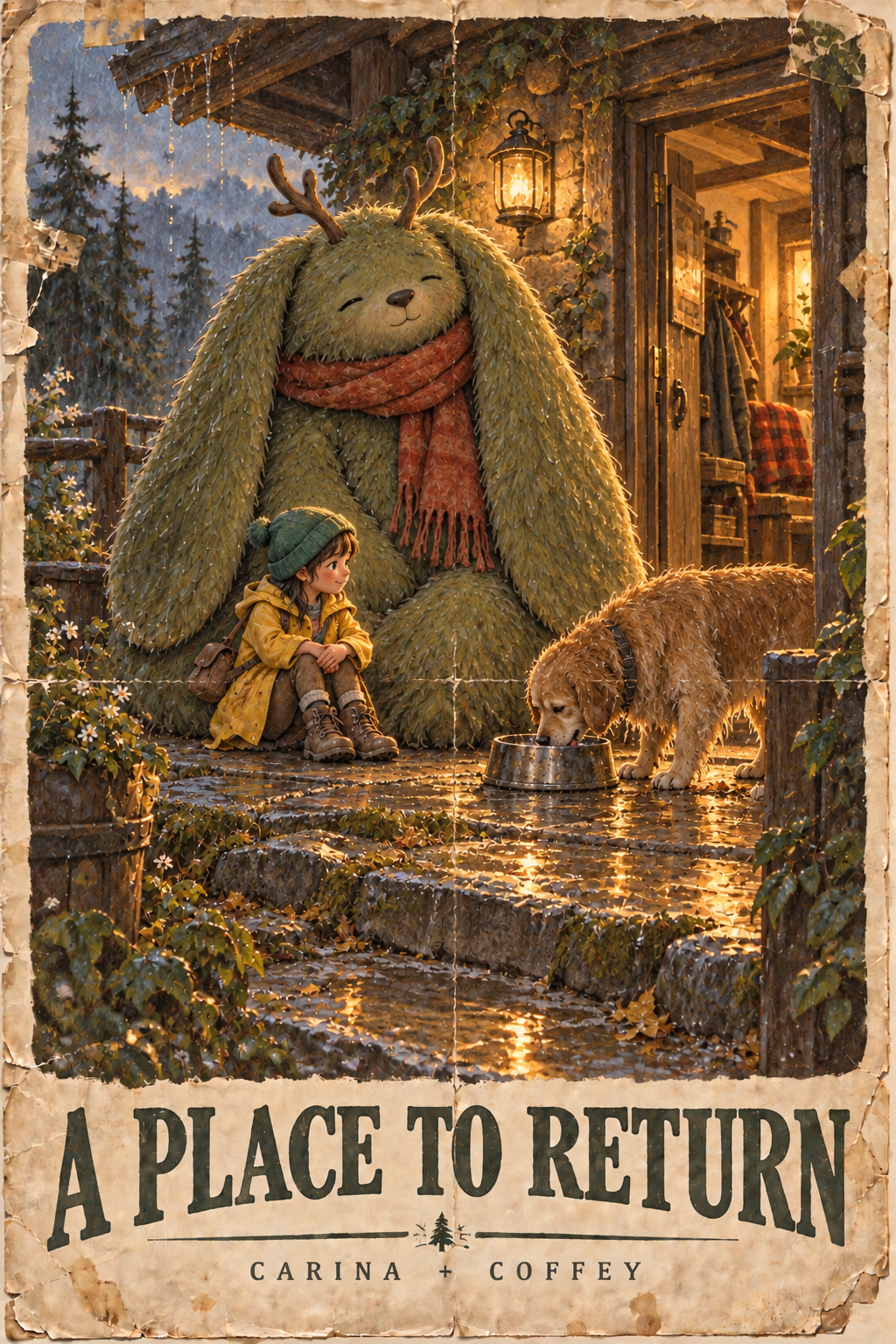
The dog was there—damp, tired, and very muddy. Carina took one step forward and stopped. The dog looked at her, then at the bowl. It drank. The child sat down where the dog could see them, not close enough to make it choose between water and company.
After a while, the dog crossed the space between them and rested its chin on the child’s boot.
“You found the way back,” the child said.
Carina looked at Coffey. He was so large that he had to crouch beneath the entry roof, his long ears folded around the edge. Still, he had made himself small enough to wait.
The adults brought a dry cloth and checked the dog before anyone made plans for it. Later, when the weather was calm, they repaired the bird shelter together. The older neighbor watched from a chair near the doorway, the blue garden book resting in their lap.
“Did anything grow?” the neighbor asked.
“Not yet,” Carina said.
The neighbor smiled. “Then we will have to keep looking.”
Carina thought of the book, the dog, the quiet room, and the place they had left ready. Not every kind thing could be finished in one day. Some things needed a return visit. Some needed a little weather to pass. And some needed people willing to wait without leaving anyone alone.
She took the child’s hand. Coffey rose beside them, big enough to shade the whole doorway.
Together, they went in for lunch.
New companion art / review collection
Five moments to keep.
These are storybook and collection posters. They do not add new poster locations to the established K-33 rooms.
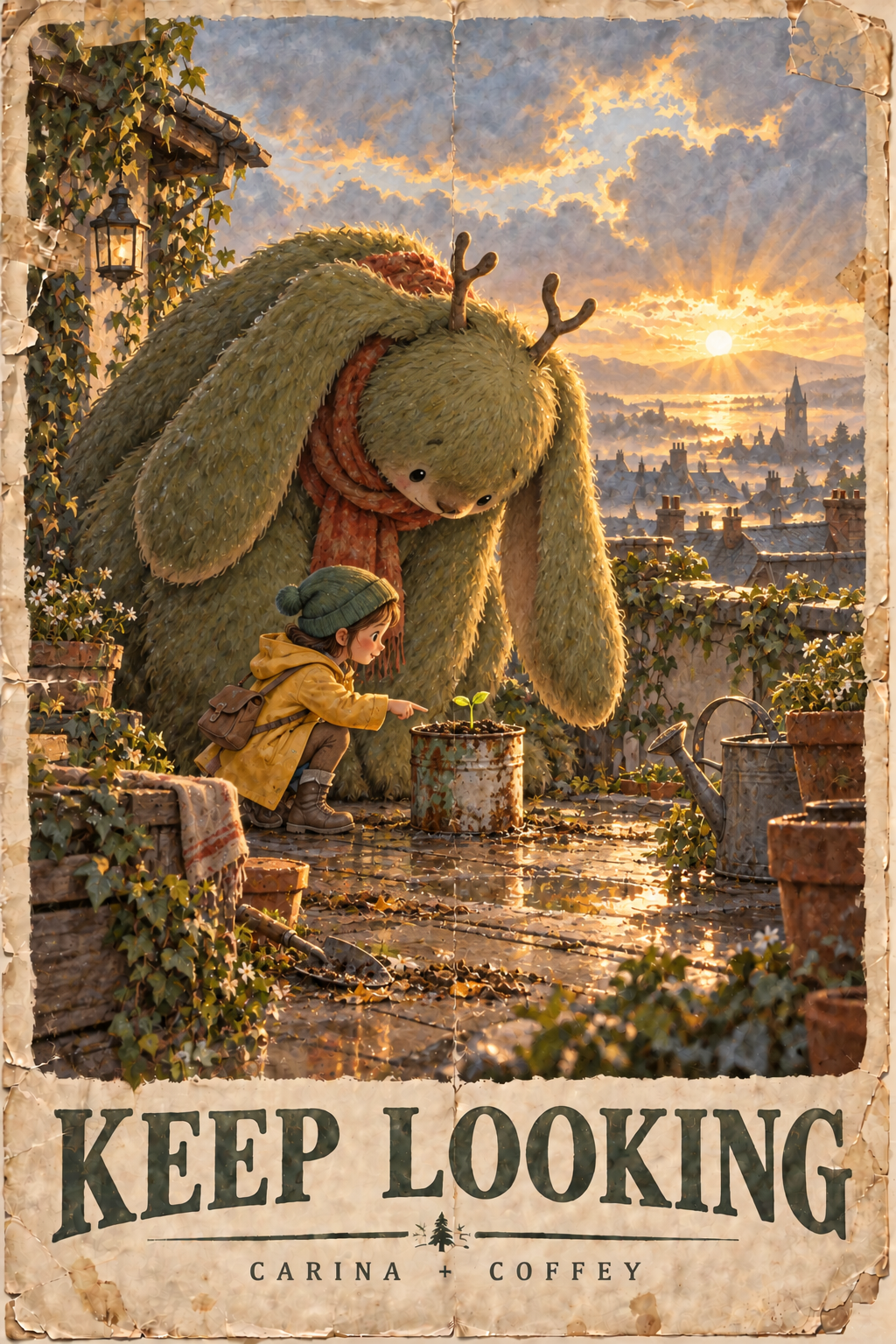
Coffey is Carina’s imagined friend within the storybook. The place names and household rhythms are drawn from the Arbeit Labs world; this continuation does not change the primary plot or place these new prints on K-33’s walls.